Medicaid and the Affordable Care Act
According to the National Family Planning & Reproductive Health Association, Medicaid is the cornerstone for publicly funded family planning. Medicaid has required states to cover family planning services and supplies since 1972. Since the 1980s, it has been the leading source of public funding for family planning. The importance of Medicaid’s coverage for family planning has grown further with expanded eligibility under the Affordable Care Act (ACA). The expansion enabled 15.5 million people to gain coverage since 2013. Medicaid is required to offer the full range of contraceptive methods, must have at least one option for each contraceptive category. Benefits are provided in partnership with funding from states. The federal government covers about 90% of the cost. Medicaid-funded family planning is exempt from individual cost sharing, meaning individuals do not need to pay co-pays or deductibles for family planning care. Protecting full federal support for Medicaid and the ACA expansion is critical to sustaining family planning services for people with low-incomes.
The 340B Drug Pricing Program
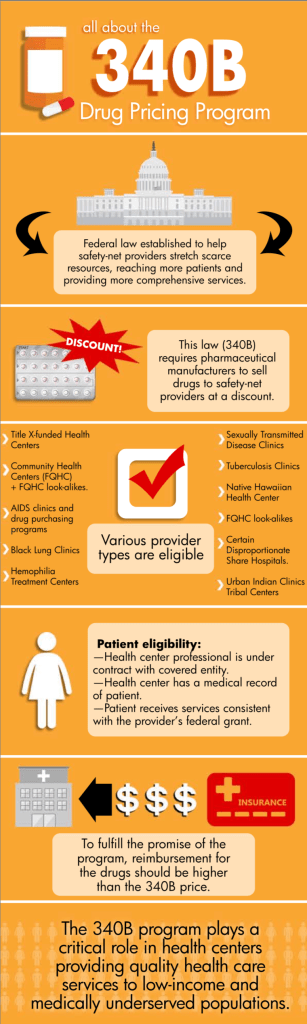
This program is part of the Public Health Services Act and was initiated over 25 years ago. It controls the costs of contraceptive medications and implants by requiring pharmaceutical manufacturers who participate in Medicaid to sell outpatient drugs at discounted prices to health care organizations including community health centers, hospitals, and rural referral centers. Organizations can use the 340B program to save on costs and enable the organizations to afford to care for uninsured patients. According to the Health Resources and Services Administration (HRSA), organizations can save and average of 25-50% on pharmaceutical purchases. The program has a proven record of decreasing government spending at the same time as it increases access to care for millions.
Sadly, despite this, some are pushing to scale back this program. This program needs protecting as it is essential to helping providers stretch limited resources to better serve their vulnerable patients. The American Hospital Association is one group that is taking a position to defend this program and expand the program to include investor-owned hospitals that provide care for the underserved.

Coding and Billing
The National Family Planning and Reproductive Health Association has created a practical solutions manual with example case studies and useful tools to help providers adapt to the changes created by the Affordable Care Act. It includes an online resource directory and billing and coding training to support providers to be able to sustain their work by being reimbursed fairly for services provided. Coding and Billing correctly for services is an important part of communicating the value of what has been provided to the patient.
 Reproductive Health Equity for Women in Recovery
Since I am unfamiliar with the 340B Drug Pricing Program, I was interested to read about what is is and what it does. It sounds like patients with Medicaid are receiving adequate coverage presently for their family planning services.
However, this is only if the push-back from opposing people or groups does not increase and change things. Additionally, listing the resource for coding and billing assistance from the National Family Planning and Reproductive Health Association is very valuable in your posting.
LikeLike