Like no other time in history, telehealth is being used to offer services during the COVID-19 pandemic. Rapid change of practice in response to physical distancing recommendations has resulted in increasing numbers of practices and hospitals turning to telehealth to safely care for patients.
Policy changes have been made at unprecedented speeds to allow for the accommodations needed. Recently, Medicare announced it would support telehealth by expanding reimbursement for office, hospital and other telehealth visits in the U.S. This is a landmark change as, prior to this, Medicare was only reimbursing in limited telehealth situations such as patients living in rural areas. Now patients can stay at home and schedule virtual visits with their provider and avoid potentially exposing others or themselves to infection. President Trump discussed the expanded telehealth options and commented that users “are loving it.”(1) He went on to project that it may change the way the country functions medically in the future.
Family planning options have existed online and via telehealth prior to the pandemic, but may now be experiencing an uptick in usage. Traditional practices are also now adjusting their practices to enable counselling and prescribing birth control remotely. While family planning will always need some face to face care as certain methods can only be placed or removed by a provider, increasing options regarding how women access family planning may have lasting changes even in more traditional settings.
Currently, birth control can be delivered directly to a person’s home via mail-order services. Some require standardized health questionnaires to be filled out online, while others use video visits with a provider. Technologies to support these services include videoconferencing, the internet, store-and-forward imaging, streaming media, and terrestrial and wireless communications (2). Telehealth has to potential to improve patient access and experience, reduce costs, and address staffing shortages (2).
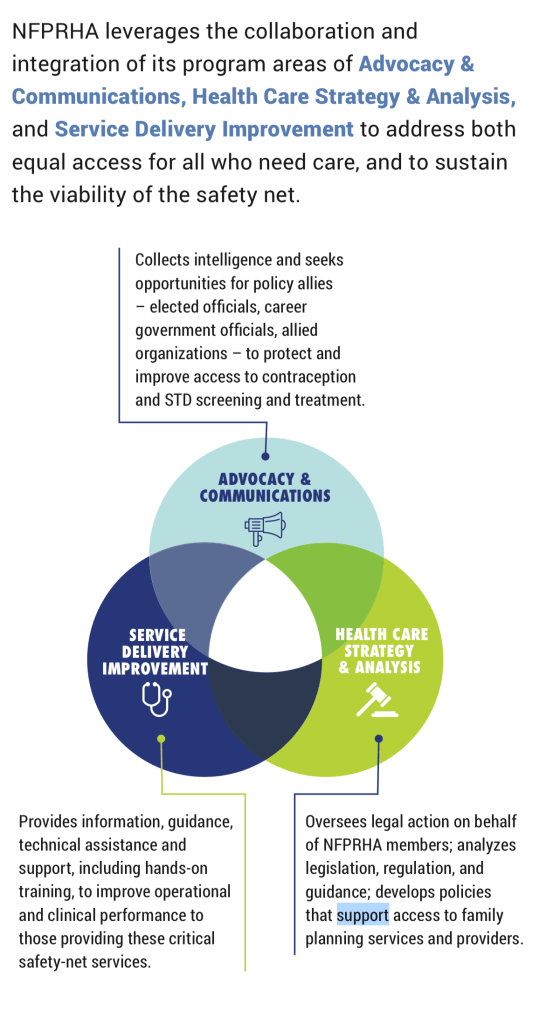
The National Family Planning and Reproductive Health Association (NFPRHA) provides resources and technical assistance regarding telehealth needs assessment, implementation, and policy and regulation. NFPRHA also provides a forum for information sharing among provider/members who are interesting in telehealth family planning.
Bedsider, is a non-profit user-friendly online resource for sexual health and family planning. It lists some of the innovative programs offering telehealth family planning to women. Bedsider is widely endorsed by health care providers and has helpful information and resources for both providers and patients. Bedsider provides an easy to use search engine to find traditional health centers, telehealth, home delivery, and emergency contraception by zip code.

Here are some of the innovative companies providing remote family planning:
Þ 28H – Twentyeight Health
Þ HeyDoctor
Þ Nurx
Þ Pandia Health
Þ The Pill Club
Þ PillPack
Þ Simple Health
References
- White House. Remarks by President Trump, Vice President Pence, and Members of the Coronavirus Task Force in Press Briefing. (2020) Retrieved from https://www.whitehouse.gov/briefings-statements/remarks-president-trum-vice-president-pence-members-coronavirus-task-force-press-briefing-4/.
- National Family Planning and Reproductive Health Association. (2019). Health Care and Technology. Retrieved from https://www.nationalfamilyplanning.org/pages/issues/issues—providing-high-quality-services—health-care-and-technology
- Bedsider. How to get birth control delivered right to your door. (2019). https://www.bedsider.org/features/851-how-to-get-birth-control-delivered-right-to-your-door
 Reproductive Health Equity for Women in Recovery
Discussing the role technology plays in each of our topics is timely. The quick transition to telehealth during this period is going to be a huge step for future use. While some providers had already integrated telehealth into their services, many had not used it until now. I believe this time will serve as a lesson for all of us and will expand the reach we have for meeting people where they are. As you pointed out in your post, there are many companies who have been making reproductive services available for years and they can serve as a guide during this time as people attempt to navigate this new territory. Thank you for introducing me to Bedsider, I had not heard of this service before now and will definitely recommend it in the future. Planned Parenthood (2019) has an app called Planned Parenthood Direct which offers birth control and UTI treatment for users. This app could serve as a model for how other health organizations figure out how to offer certain health services using telemedicine long term.
Reference
Planned Parenthood. (2019). ‘Planned Parenthood Direct’ app expands to more than half the country. Retrieved from https://www.plannedparenthood.org/about-us/newsroom/press-releases/planned-parenthood-direct-app-expands-to-more-than-half-the-country
LikeLike