Private organizations can be strong leaders of policy change. Power to Decide is a non-profit organization active in advocating for policies that support a woman’s “right to determine if, when, and under what circumstances she would like to become pregnant. Power to Decide stands for equity, stating
“To us this means the promise that everyone gets exactly the information and access to care they need to achieve healthy outcomes—no matter their ultimate decision. They get it on their terms, from someone who understands and respects them.”
Tara Mancini, the Senior Manager of Public Policy for Power to Decide refers to the non-profit’s mission statement
I had the opportunity to interview Tara Mancini, the Senior Manager of Public Policy for Power to Decide. She shared with me the importance of representing all women with reproductive autonomy policies, regardless of their race, wealth, health, or “place in society”.
She shared that she was unaware of any policies specifically related to birth control for women with substance use disorders. In fact, we discussed it may be an improper goal-as targeting certain groups may violate ethics. However, she shared that women with SUDs can benefit from the global work of promoting reproductive autonomy and access to quality information and care for all women. Tara shared how they are working on public policy to promote one of their key initiatives, One Key Question® (OKQ). OKQ is a tool that can be used with all women to guide conversations about reproduction and pregnancy desires.
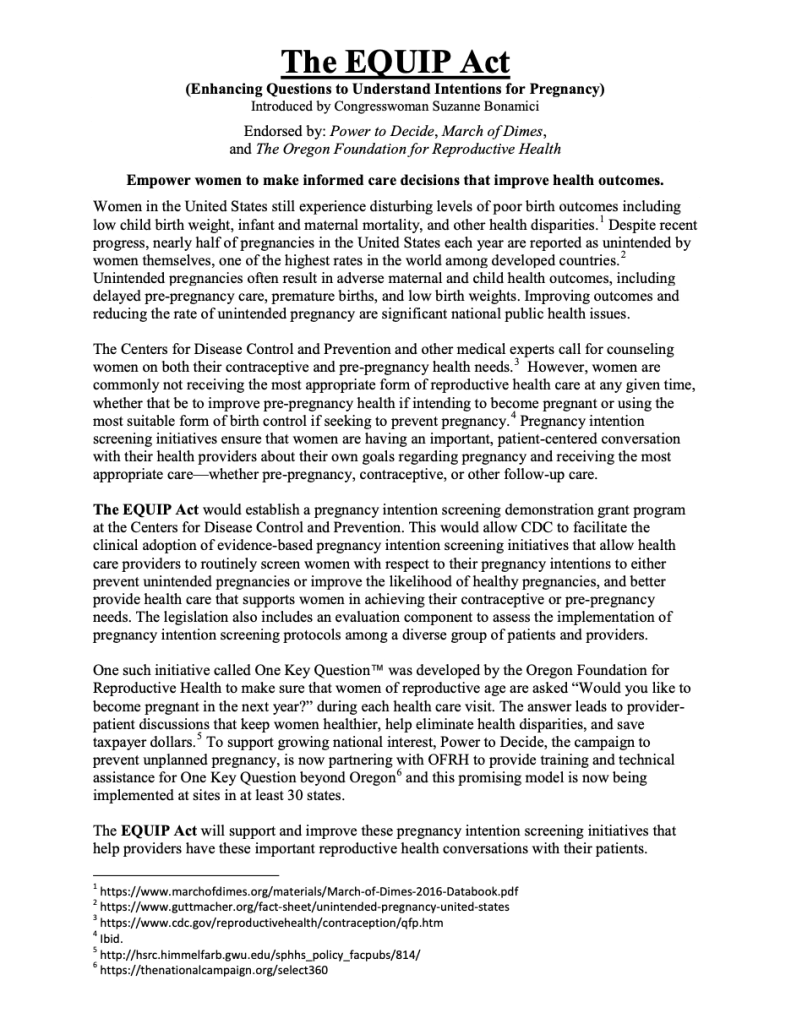
Tara discussed the importance of collaborative alliances and gathering strength from working with others with similar goals. She shared with me information about the EQUIP (Enhancing Questions to Understand Intentions for Pregnancy) Act that was first introduced in the 115th Congress by Congresswoman Suzanne Bonamici. The Act was officially endorsed by Power to Decide, the March of Dimes, and the Oregon Foundation for Reproductive Health, an example of non-profit private organizations with overlapping goals working together in policy making.
The EQUIP Act is a bill written to gain support for efforts to reduce unintended pregnancy through federal investments and grants to study the effectiveness of pregnancy intention screening programs in different settings. Tara shared how Power to Decide, the March of Dimes, and the Oregon Foundation for Reproductive Health worked with Congresswoman Bonamici to ensure the language of the act was evidence-based and avoided potential pitfalls like coercion or funds going to places that might not take family planning seriously. Some of the language included was specifically intended to protect the autonomy of vulnerable populations, such as women in recovery.

Here is an excerpt of some the protective language that was included:
“(C) Consideration of health disparities among the population served.
“(D) Assessment of the equitable and voluntary application of such initiatives to minority and medically underserved communities.
“(E) Assessment of the training, capacity, and ongoing technical assistance needed for providers to effectively implement such pregnancy intention screening protocols.”
Section of the EQUIP Act
A press release by Congresswoman Bonamici summarizes the act below:
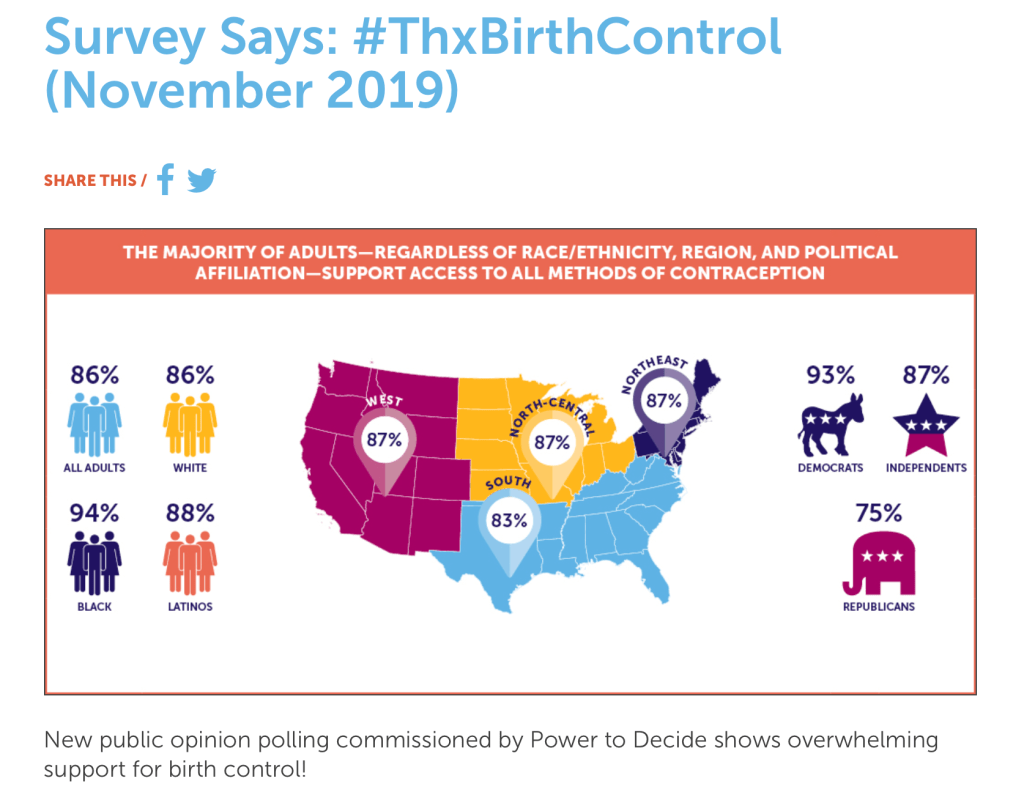
Tara informed me that Power to Decide also influences policy making by conducting and reporting public opinion surveys to inform policymakers of the desires of their constituents. Last November Power to Decide conducted a survey regarding access to birth control. Sharing these results can help policymakers vote in favor of policies that promote access to birth control.
 Reproductive Health Equity for Women in Recovery